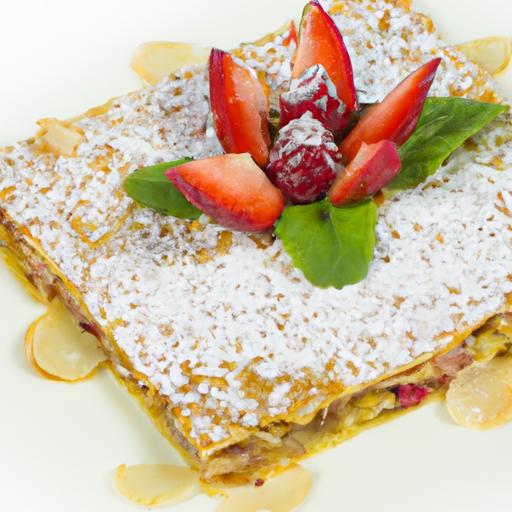
There’s a certain enchantment woven into the flaky layers of a mille-feuille-a classic French pastry that’s as much a feast for the eyes as it is for the palate. Frequently enough called the ”Napoleon,” this delicate dessert is a symphony of crisp puff pastry, smooth vanilla cream, and a glossy glaze that beckons with every bite. But beneath its elegant exterior lies a history rich with artistry and technique, a culinary tradition perfected over centuries. In this article, we’ll embark on a journey to unlayer the mille-feuille magic, exploring its origins, the meticulous craft behind its construction, and the secrets that make this timeless delight a treasured icon of French patisserie. Whether you’re a seasoned pastry aficionado or a curious newcomer, prepare to discover the story behind every flaky fold and luscious cream filling.
Discovering Mille-Feuille Magic: A Timeless French Treasure
Mille-Feuille Magic captures the essence of French patisserie through delicate, shimmering layers of puff pastry and luscious cream filling. This iconic dessert, often called the “Napoleon,” has enchanted palates since the 17th century, weaving a rich history that melds French artistry with irresistible textures. Originating from the word meaning “a thousand leaves,” its flaky layers provide an elegant canvas to explore a blend of classic and innovative flavors. My first encounter with this dessert was at a quaint Parisian café, where the balance of crispy pastry meeting silky pastry cream inspired a passion to master its planning at home.
Prep and Cook time
- Preparation: 1 hour 30 minutes (including chilling)
- Cooking: 30 minutes
- Total Time: 2 hours
yield
Serves 8 elegantly layered slices
difficulty Level
Advanced: Requires patience and precise technique, especially for the perfect puff pastry.
Ingredients
- For the Puff pastry:
- 2 cups (250g) all-purpose flour, sifted
- 1 tsp fine sea salt
- 1/2 cup (120ml) cold water
- 1 cup (225g) unsalted butter, chilled and cubed
- For the Pastry Cream:
- 2 cups (480ml) whole milk
- 1/2 cup (100g) granulated sugar, divided
- 1 vanilla bean, split and scraped (or 2 tsp pure vanilla extract)
- 4 large egg yolks
- 1/4 cup (30g) cornstarch
- 2 tbsp unsalted butter, softened
- For the Icing:
- 1 cup (120g) powdered sugar
- 2 tbsp milk
- 1 tsp lemon juice
- Dark chocolate, melted (for delicate feathering)
Step-by-Step Instructions
- Prepare the Puff Pastry: In a large bowl, whisk together the flour and salt. Gradually add the cold water and mix until just combined. Turn dough onto a lightly floured surface and shape into a rough square. Wrap and chill in the fridge for 30 minutes.
- Incorporate the Butter: Roll the chilled dough into a large rectangle. Evenly spread the chilled butter cubes over two-thirds of the dough, leaving the remaining third bare. Fold the dough like a letter: fold the bare third over the buttered middle, then fold the remaining third on top.
- Layer and Chill: Roll the dough out into a rectangle again, taking care to keep edges straight.Fold the dough in thirds again and wrap tightly. Chill for 30 minutes. Repeat this rolling and folding process 3 more times for lovely, flaky layers.
- bake the Puff Pastry Sheets: Preheat oven to 400°F (200°C).Roll the dough to 1/8-inch thick, cut into three equal rectangles, and prick all over with a fork. Place between parchment paper and baking trays to keep flat and bake each for 12-15 minutes until golden and puffed. Cool wholly on wire racks.
- Make the Pastry Cream: Heat the milk and half the sugar with the vanilla bean pod until steaming hot. In a bowl, whisk egg yolks, remaining sugar, and cornstarch until smooth. Slowly temper the hot milk into the egg mixture,whisking constantly.
- Cook the Cream: Transfer the mixture back to the saucepan and cook over medium heat,stirring continuously until thickened and bubbling (about 2-3 minutes). Remove from heat, stir in butter, and strain through a sieve. Cover with plastic wrap on surface to prevent skin and chill completely.
- Prepare the Icing: Whisk together powdered sugar, milk, and lemon juice to a smooth, pourable consistency.
- Assemble the Mille-Feuille: Lay one puff pastry rectangle on a serving board. Spread a generous layer of chilled pastry cream evenly. Repeat layering with the second pastry and cream. Top with the final puff pastry rectangle.
- Decorate: Pour the icing over the top layer and smooth. While still wet, pipe parallel lines of melted chocolate across the icing. Use a toothpick to drag through lines in alternating directions, creating the signature feathered pattern. Chill for at least 1 hour before slicing with a sharp serrated knife.
Tips for Success: Elevating Your Mille-Feuille Magic
- Butter Temperature: Keep your butter cold and chunky for those perfect flaky layers. Warm butter will merge with the dough and lose the “leafy” texture.
- Rest and chill: Chilling between folds prevents gluten advancement,making puff pastry tender,not tough.
- Pastry Cream Texture: Strain your cooked cream to remove lumps and ensure a velvety finish.
- Make ahead: Puff pastry and pastry cream can be prepared a day before. Assemble just before serving for the crispiest texture.
- Flavor Variations: Infuse pastry cream with citrus zest,coffee,or matcha for a creative twist.
Serving Suggestions
Slice each mille-feuille carefully with a sharp serrated knife, cleaning the blade between cuts to maintain neat layers. Serve on elegant plates garnished with fresh raspberries, edible flowers, or a light dusting of powdered sugar. Offer a side of freshly whipped cream or a thin drizzle of berry coulis to complement the rich creaminess and crunchy pastry layers beautifully.

| Nutrient | Per Serving |
|---|---|
| Calories | 410 kcal |
| Protein | 6g |
| Carbohydrates | 43g |
| Fat | 24g |
For a deeper dive into pastry techniques and recipes that complement Mille-Feuille Magic, explore our Classic French Pastries Guide. To understand the science behind puff pastry layers, visit the insightful resource at Cooking Science Institute.
Q&A
Q&A: Mille-Feuille Magic – Unlayering the Classic French Delight
Q1: What exactly is a mille-feuille?
A1: Mille-feuille, frequently enough dubbed the “Napoleon,” is a quintessential French pastry whose name translates to “a thousand layers.” It’s a delicate symphony of thin, crispy puff pastry sheets layered with luscious pastry cream, frequently enough finished with a glossy icing or dusting of powdered sugar. Each bite reveals a perfect balance of light flakiness and creamy sweetness-a true testament to French patisserie artistry.
Q2: Where dose the name “mille-feuille” come from?
A2: The term “mille-feuille” directly means “thousand leaves,” referring to the many flaky layers of puff pastry that compose the dessert. This poetic name captures the pastry’s essence-a light, airy texture created by countless buttery sheets, seamlessly stacked and baked to golden perfection.
Q3: How is the classic mille-feuille constructed?
A3: traditionally, a mille-feuille consists of three layers of puff pastry alternated with two layers of rich pastry cream (crème pâtissière).The top layer is often adorned with a thin glaze of fondant icing, elegantly streaked with chocolate in a feathered pattern called “feathering” or “marbling.” Some variations use whipped cream or fruit jam, but the classic balance remains a hallmark of this indulgent treat.
Q4: What makes mille-feuille different from other layered pastries?
A4: Unlike simpler layered cakes or tarts, the mille-feuille’s charm lies in its airy puff pastry-which rises and separates into ultra-thin, crispy sheets-and its velvety custard layers. This combination creates a unique contrast in texture and flavor that’s both light and decadently rich, making it stand apart in the world of French desserts.Q5: Can mille-feuille be flavored or customized?
A5: Absolutely! While the classic vanilla crème pâtissière is beloved,contemporary bakers often experiment with flavors like coffee,chocolate,pistachio,or seasonal fruits. Some modern takes blend different creams or fold in fresh berries, giving new life to a centuries-old favourite while still honoring the pastry’s layered legacy.
Q6: Any tips for enjoying mille-feuille at home or in a patisserie?
A6: Mille-feuille is best enjoyed fresh-the puff pastry should be crisp, and the cream silky and cool. Resist the urge to let it sit too long, as humidity can soften the pastry layers. When serving at home, slice gently with a sharp knife to preserve the structure of layers and savor the delicate interplay of textures.And if indulging at a bakery, pair it with a light espresso or a fragrant tea to complement its richness.
Q7: Why has mille-feuille remained a beloved classic through the ages?
A7: Mille-feuille’s enduring allure comes from its brilliant simplicity-a masterful balance of texture, flavor, and elegance. It reflects the artistry and precision of French baking, a perfect treat where technique meets taste. Each layer tells a story of craftsmanship, making every bite a delightful journey into the heart of French culinary tradition.
In Summary
As we close the final flaky layer of this exploration into the mille-feuille, it’s clear that beyond its delicate, buttery sheets lies a rich tapestry of history, technique, and artistry. This classic French delight is more than just a pastry-it’s a celebration of precision and patience, a symphony of textures and flavors that has enchanted taste buds for generations. Whether you savor it in a quaint Parisian café or attempt your own layered masterpiece at home, the mille-feuille invites you to appreciate the magic hidden between its crisp folds.So next time you bite into this timeless treat, remember: each layer tells a story, waiting to be unlayered and enjoyed bite by delicious bite.