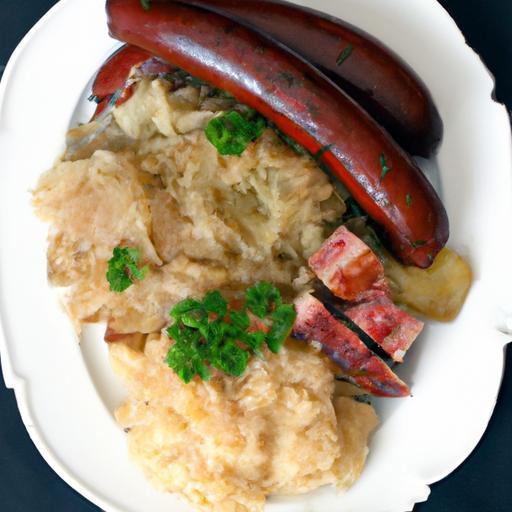
Nestled in the heart of the Alsace region, were French finesse meets Germanic tradition, lies a dish that tells a story of history, culture, and community-Choucroute Garnie. This hearty sauerkraut feast is much more than a comforting winter meal; it’s a flavorful tapestry woven from tender smoked sausages, succulent pork cuts, and tangy fermented cabbage, all simmered together in a symphony of spices and wine.As we embark on a journey through Alsace’s culinary heritage, Choucroute Garnie invites us to savor not just its rich layers of taste, but also the vibrant traditions and rural life that have preserved this beloved dish for centuries. Join us as we explore the origins, ingredients, and rituals that make Choucroute Garnie a true emblem of Alsatian hospitality and gastronomy.
Choucroute Garnie is a quintessential Alsatian dish that perfectly marries tangy sauerkraut with a hearty medley of meats and potatoes. This iconic feast celebrates Alsace’s rich culinary heritage, rooted in centuries of cross-cultural influence along the french-German border. traditionally enjoyed during the colder months, this dish comforts with its robust flavors and satisfying textures.Without the usual pork-based proteins, this fresh take highlights the versatility of Choucroute Garnie, honoring the original spirit while introducing a modern, inclusive approach to the classic sauerkraut feast.
Prep and Cook Time
- Preparation: 20 minutes
- cooking: 1 hour 45 minutes
- Total Time: 2 hours 5 minutes
Yield
Serves 6 generously
Difficulty Level
Medium – requires attentive layering and slow simmering for full flavor development
Ingredients
- 1.5 lbs sauerkraut, rinsed and drained
- 2 tbsp unsalted butter
- 1 large onion, thinly sliced
- 3 garlic cloves, finely minced
- 1 cup dry apple cider
- 2 cups vegetable broth
- 1 large Granny Smith apple, peeled and sliced
- 1 bay leaf
- 1 tsp juniper berries, lightly crushed
- 1 tsp black peppercorns
- 12 bratwurst sausages (beef, chicken or turkey-based)
- 3 large carrots, peeled and cut into chunks
- 1.5 lbs new potatoes, scrubbed
- Fresh parsley for garnish
Instructions
- Prepare the sauerkraut base: In a large heavy-bottom pot, melt the butter over medium heat. Add the sliced onion and sauté until translucent and fragrant, about 7 minutes. Stir in the garlic and cook for an additional minute.
- add the sauerkraut: Toss the sauerkraut into the pot, stirring to blend with the softened onions and garlic. Pour in the apple cider and vegetable broth, mixing well.
- Season the mixture: Tuck in the bay leaf, juniper berries, and peppercorns.Add apple slices to infuse a subtle fruity note that beautifully balances the tang of the sauerkraut. Cover and reduce heat to low, letting it gently simmer for 1 hour. Stir occasionally to prevent sticking.
- Prepare the potatoes and carrots: About 25 minutes before the sauerkraut finishes cooking, add the carrots and new potatoes directly to the pot, nestling them in the sauerkraut. Cover and continue simmering.
- Add the sausages: During the last 15 minutes of cooking, gently place your choice of bratwurst sausages on top of the sauerkraut mixture. Cover and allow the sausages to steam and cook through, soaking in the flavors.
- Final touch and serve: Remove the bay leaf and peppercorns before plating. Use a slotted spoon to serve portions of sauerkraut, vegetables, and sausages. Garnish with a generous sprinkle of fresh parsley to add a lively colour and fresh aroma.
tips for Success
- Rinsing the sauerkraut: Lightly rinsing reduces excess acidity but preserves the essential tang that defines the dish.
- meat alternatives: Opt for high-quality chicken,turkey,or beef bratwurst from a trusted butcher to keep the dish hearty without pork.
- Batch cooking: This dish improves overnight as flavors meld. prepare a day ahead and reheat gently.
- Juniper berries: Don’t skip the juniper; their piney, resinous flavor is signature to Alsatian choucroute.
- Serving with mustard: A side of whole grain mustard adds a sharp, spicy contrast that brightens the palate.
Serving Suggestions for Choucroute Garnie
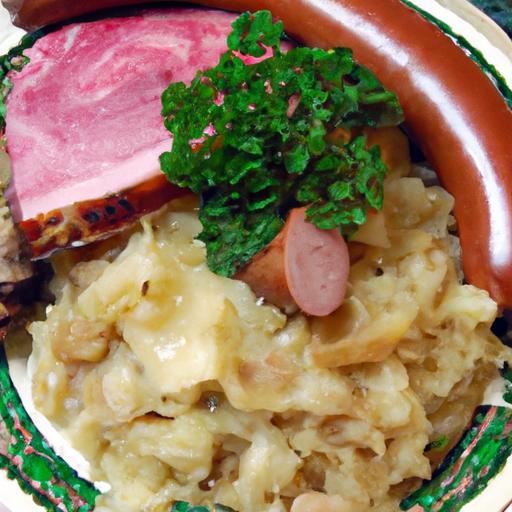
Serve piping hot alongside crusty rye or sourdough bread to soak up the savory juices. Correctly plated, the pale sauerkraut nestles invitingly beneath golden-brown sausages and vibrant roasted carrots and potatoes. Add a sprig of fresh parsley or thyme for a pop of herbal freshness. Complement the dish with simple pickles or a light mustard to amplify the layered flavors. For a modern twist, pair with a crisp apple and fennel salad to bring crunch and brightness to every bite.
| Nutritional Info (per serving) | Calories | Protein | Carbs | Fat |
|---|---|---|---|---|
| Choucroute Garnie Feast | 580 kcal | 32 g | 45 g | 23 g |

Pairing and Places to Experience the True Essence of This Alsatian Classic
The traditional beverage to accompany this robust dish is a crisp Riesling or a dry Pinot Blanc, both native to the Alsace region, enhancing the dish’s tang and savory depth. For side dishes, light spätzle or buttered new potatoes complement the sauerkraut’s vibrant acidity beautifully. To explore authentic choucroute Garnie beyond your kitchen, Alsace’s villages like Strasbourg, colmar, and Obernai boast bistros and winstubs proudly serving carefully curated versions. Traveling further afield,find Alsatian-specialty restaurants in major European cities maintaining the heart of this feast. For a dive into Alsatian food culture and wine, Visit Alsace offers rich insights and travel inspiration.
For a related culinary exploration, also check our detailed guide on Alsatian Flavors: Spätzle and Tarte Flambée, perfect pairings to elevate your taste of this storied region.
Q&A
Q&A: Exploring choucroute Garnie – Alsace’s Hearty Sauerkraut Feast
Q1: What exactly is choucroute Garnie?
A1: Imagine a cozy winter hug on a plate-Choucroute Garnie is the quintessential Alsatian dish that celebrates sauerkraut (choucroute) draped with an array of succulent meats (garnie means “garnished” or “decorated”). Think tender smoked sausages, juicy pork knuckles, salty bacon, and sometimes even ham hocks, all slow-cooked to meld their flavors perfectly with the tangy, fermented cabbage.
Q2: Why is sauerkraut so central to this dish?
A2: Sauerkraut is the soul of this feast. This fermented cabbage brings a bright,tangy kick that balances the richness of the meats,acting both as a palate cleanser and a superfood packed with probiotics. In Alsace’s cold climate, sauerkraut was historically a vital way to preserve cabbage for the winter months, turning necessity into a flavorful tradition.
Q3: How does Choucroute Garnie reflect Alsace’s history and culture?
A3: Alsace sits at the crossroads of french and German influences,and Choucroute Garnie is a delicious embodiment of that cultural fusion. Sauerkraut is traditionally German, while the French flair can be seen in the careful selection of meats and accompanying wines. The dish tells a story of resilience, blending rustic farmhouse cooking with refined techniques cherished through generations.
Q4: What are the key ingredients that make this dish special?
A4: At its heart, Choucroute Garnie features sauerkraut simmered with white wine, juniper berries, bay leaves, and onions, creating a fragrant, zesty base. It’s garnished with a bounty of pork specialties-smoked sausages (like knack or Morteau), pork belly, salted pork, and sometimes even foie gras or potatoes for added comfort. Each ingredient contributes layers of flavor and texture, making every bite a journey.
Q5: can Choucroute Garnie be paired with wine? If so, which ones?
A5: Absolutely! The Alsatian cuisine and wine traditions go hand in hand. A crisp, dry white wine like a Riesling or Sylvaner from the region cuts through the richness and complements the acidity of the sauerkraut beautifully. These wines refresh the palate with their minerality and bright fruit notes-a perfect sip alongside this hearty feast.
Q6: Is Choucroute Garnie only eaten in winter?
A6: While it’s most famously enjoyed in the colder months due to its warming qualities and seasonal ingredients, Choucroute Garnie’s hearty, comforting nature has made it beloved year-round. Festivals and Alsatian restaurants serve it throughout the year, inviting food lovers everywhere to savor a piece of Alsace’s culinary heritage any time.
Q7: How can someone outside France experience authentic Choucroute Garnie?
A7: Authenticity lies in the details-but don’t be intimidated! You can find sauerkraut in most supermarkets, and specialty butchers may carry the right sausages.Slow cooking the dish with good white wine and aromatics will bring the Alsace spirit alive. For the full experience, pair the meal with an Alsatian white wine and perhaps finish with a slice of kougelhopf cake for a truly immersive feast.
Q8: What makes Choucroute Garnie stand out from other sauerkraut dishes around the world?
A8: Unlike simpler sauerkraut servings, Choucroute Garnie is a lavish tapestry of meats and careful seasoning-almost a culinary party. It’s not just a side dish; it’s a centerpiece that envelops you in the warmth of Alsatian hospitality and history. Its rich complexity and balance between tangy,smoky,and savory notes give it a personality that’s both rustic and refined,unique to Alsace’s terroir and heart.
Whether you’re a foodie curious about regional delicacies or an adventurer looking to taste history, Choucroute Garnie beckons-a hearty invitation to savor Alsace’s vibrant culinary soul.
Insights and Conclusions
As the final forkful of savory sauerkraut and tender meats settles on your palate, the true essence of Alsace lingers-rich history woven into every bite, a celebration of tradition and terroir. Choucroute Garnie is more than a dish; it’s a hearty hymn to the region’s cultural tapestry, where Germanic roots and French flair entwine in a symphony of flavor. Whether shared around a rustic table or discovered solo on a culinary adventure, this iconic feast invites you to savor not just its ingredients, but the stories and seasons that shaped it. So next time you crave comfort with character, remember: in the humble sauerkraut of Alsace, you’re tasting centuries of warmth, resilience, and culinary artistry.