In the heart of Rome’s bustling trattorias, where culinary tradition meets effortless elegance, lies a dish as simple as it is sublime: Cacio e Pepe. This iconic Roman pasta, whose name translates literally to “cheese and pepper,” is a masterclass in minimalist cooking-transforming just a handful of humble ingredients into a creamy, peppery symphony of flavors.Yet,beneath its seemingly straightforward exterior lies a delicate balance of technique and timing that separates the everyday from the extraordinary.In this article, we’ll uncover the secrets to mastering Cacio e Pepe, guiding you through the art of crafting this timeless classic with confidence and finesse. Whether you’re a seasoned cook or a curious kitchen novice, prepare to elevate your pasta game with the true taste of rome.
Understanding the Origins and Authentic Ingredients of Cacio e Pepe
Mastering Cacio e Pepe begins with honoring its timeless roots-this iconic Roman pasta is a testament to simplicity and tradition. Originating in the pastoral regions surrounding Rome, shepherds crafted this dish using just three staple ingredients: freshly ground black pepper, Pecorino Romano cheese, and pasta. The name literally means “cheese and pepper,” capturing the essence of its straightforward yet bold flavor profile. What makes Cacio e Pepe truly special is its ability to transform humble pantry staples into a rich, comforting meal that embodies Italian culinary ingenuity.
The authentic version calls for Pecorino Romano, a sharp and salty sheep’s milk cheese that delivers a perfect umami punch, and freshly cracked black pepper for that signature piquant warmth. Unlike its modern variations, it does not rely on cream or butter-just pure, unadulterated flavors harmonized with technique.
Perfecting the Art of the Cheese and Pepper Emulsion
At the heart of this dish lies the silky,glossy cheese and pepper emulsion-a delicate balance between texture and flavor that can make or break the outcome. Achieving this smooth sauce requires precise technique: using hot pasta water’s starch as a natural binder, gradually whisking in finely grated Pecorino Romano, and stirring vigorously to prevent clumps. The key is to add cheese off the heat, blending it slowly so it melts into a luscious coating without separating or turning grainy.
Equally significant is freshly cracked black pepper sautéed briefly in a splash of pasta water to release its aromatic oils. This step enhances its complexity, infusing the dish with warm, smoky notes without overpowering the subtle creaminess of the cheese emulsion.
Choosing the Right Pasta and Cooking Techniques for Optimal Texture
The pasta choice is crucial for mastering Cacio e Pepe. Traditionally, spaghetti has been the pasta of choice, its long strands ideal for wrapping the creamy sauce. Alternatively, tonnarelli-a square-cut, slightly thicker strand native to Rome-offers a toothsome bite that holds sauce beautifully. Whatever the pasta,cooking it al dente is essential to maintain the perfect tender-yet-firm texture.
Reserve ample pasta water during cooking; this starchy liquid becomes the secret weapon for adjusting sauce consistency and creating that coveted silky emulsion.Start with a small amount, incorporating more slowly to reach the ideal creamy coating without excess liquidity.
Expert Tips for Balancing Flavors and Elevating Your Presentation
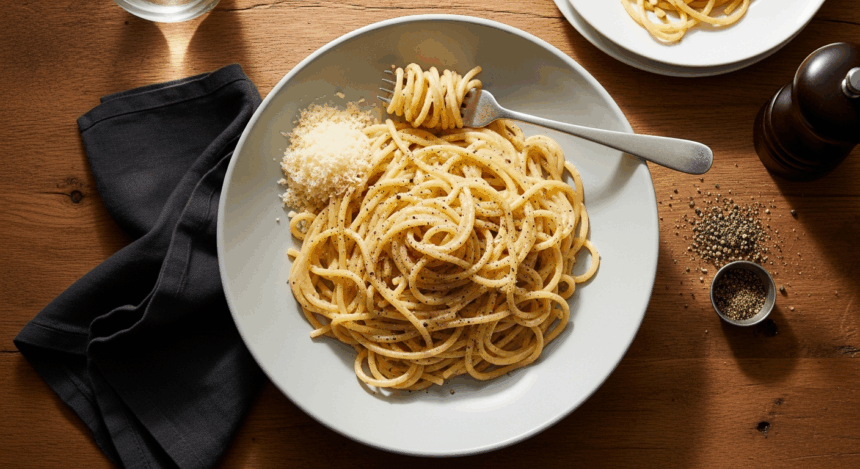
Precision and care come together in balancing the salty Pecorino and the spicy black pepper. Before serving,taste and adjust seasoning carefully-adding tiny pinches of Pecorino can tweak saltiness,while a final crack of fresh pepper brightens the dish. For presentation, a generous dusting of grated Pecorino adds visual appeal and extra flavor punch.
Consider finishing with a drizzle of high-quality extra virgin olive oil, which adds a subtle fruity note and a glossy sheen to the pasta. Serve on warmed plates to maintain the optimal temperature and keep the sauce luscious until the last bite. A sprinkle of finely chopped fresh parsley can add a delicate color contrast without interfering with the authentic flavor profile.
Prep and Cook Time
- Prep time: 10 minutes
- Cook time: 15 minutes
- Total Time: 25 minutes
Yield
- Serves 4 generous portions
Difficulty Level
- Easy to Medium – perfect for home cooks ready to elevate simple ingredients with technique
ingredients
- 400g spaghetti or tonnarelli pasta
- 1 ½ cups finely grated Pecorino Romano cheese
- 2 teaspoons freshly cracked black pepper
- 1 cup reserved starchy pasta water
- 1 tablespoon extra virgin olive oil
- Salt, for pasta water
Instructions
- Bring a large pot of salted water to a boil.Add the pasta and cook until al dente (usually 1-2 minutes less than package instructions).
- While pasta cooks, toast the freshly cracked black pepper in a large skillet over medium heat with 1 tablespoon reserved pasta water for about 1 minute, releasing aromatics; then remove from heat to prevent burning.
- Before draining pasta, reserve 1 cup of the cooking water, then drain the pasta swiftly.
- Add the hot pasta instantly to the skillet with pepper; toss to coat, then gradually add the Pecorino Romano cheese in small handfuls off the heat.
- Slowly pour the reserved pasta water while vigorously stirring or tossing the pasta, coaxing the cheese to melt and emulsify with the water and pepper, forming a creamy sauce.
- Add extra pasta water by teaspoonfuls if necessary to loosen the sauce-aim for a glossy, clingy coating rather than a watery mix.
- Check seasoning, adding a pinch of salt or more cheese if desired. Finish with a drizzle of extra virgin olive oil and a fresh crack of black pepper.
- plate immediately on pre-warmed dishes for best texture and presentation.
Tips for Success
- Use freshly cracked black pepper: Pre-ground lacks the pungency needed for full flavor impact.
- Grate pecorino Romano finely: This ensures quick melting and a smooth sauce.
- Patience with emulsification: Add cheese and water slowly to avoid clumping or graininess.
- Save enough pasta water: Its starch is your best friend for seamlessly binding sauce and pasta.
- Serve immediately: Cacio e Pepe is best enjoyed fresh; the sauce thickens and clumps if left to sit.
Serving Suggestions
Serve your masterpiece with a sprinkle of extra Pecorino over the top and a final flourish of cracked black pepper. A handful of vibrant green parsley or a few slow-roasted cherry tomatoes on the side add brightness and color contrast without overpowering the dish’s purity. Pair it with a crisp mixed green salad dressed lightly in lemon and olive oil to balance the richness.

| Nutrient | Per Serving |
|---|---|
| Calories | 460 kcal |
| Protein | 17 g |
| Carbohydrates | 72 g |
| Fat | 10 g |
For a deeper dive into authentic Italian pasta techniques, explore our related guide on Italian Pasta Basics. To learn more about the rich history of Pecorino Romano cheese, visit the Consortium of Pecorino Romano.
Q&A
Q&A: Mastering Cacio e Pepe – The Simple Roman Pasta Recipe
Q1: What exactly is Cacio e Pepe?
A1: Cacio e Pepe, which translates literally to “cheese and pepper,” is a quintessential Roman pasta dish known for its ultra-simple ingredient list and bold flavors.It’s a party of a few humble pantry staples-pecorino romano cheese, freshly cracked black pepper, pasta, and pasta water-coming together to create creamy, peppery perfection.Q2: Why is Cacio e Pepe so beloved in Roman cuisine?
A2: In Rome, the brilliance is in its simplicity. The dish embodies “la cucina povera” (peasant cooking), demonstrating how quality ingredients and technique can elevate a few staples into something breathtaking.It’s comfort food, tradition, and culinary wit all rolled into one silky bowl of pasta.
Q3: Which pasta shape works best for Cacio e Pepe?
A3: The classic choices are long, thin strands like spaghetti, tonnarelli, or bucatini. These shapes hold the creamy cheese sauce just right while allowing the pepper’s sharpness to coat each strand. However, feel free to experiment-just keep the pasta long and the cooking precise.
Q4: What’s the secret to the sauce’s signature creamy texture without using any cream?
A4: The magic lies in the starchy pasta water! When you reserve and then slowly mix hot pasta water with finely grated pecorino romano and cracked black pepper, they emulsify into a luxuriously creamy sauce. Constant tossing and patience are key to avoid clumps and unleash that silky coating.
Q5: How important is the cheese, and can I substitute pecorino romano?
A5: Pecorino romano is king in Cacio e Pepe-its sharp, salty punch defines the flavor profile. While parmesan (Parmigiano-Reggiano) can be a milder fallback, it won’t deliver the same boldness. For an authentic experience, seek out good-quality pecorino romano and grate it fresh.
Q6: How do I prevent the cheese from clumping or becoming too grainy?
A6: To keep the sauce smooth, it helps to finely grate the cheese and gradually add it to the hot pasta water while vigorously stirring or tossing the pasta.Adding the cheese off the heat and combining it with warm pasta water helps the fats melt evenly, avoiding clumps. Patience and technique trump shortcuts here!
Q7: Is freshly cracked black pepper necessary, or can I use pre-ground?
A7: Freshly cracked black pepper is essential.Its volatile oils and bold aroma dim considerably in pre-ground pepper, which can leave the dish dull. Grind whole peppercorns just before cooking for that vibrant kick that dances alongside the creamy cheese.
Q8: Can I make Cacio e Pepe ahead of time?
A8: Ideally, Cacio e Pepe should be enjoyed immediately after planning; the sauce is at its creamiest and most vibrant fresh off the stove. If you must prepare in advance, keep the pasta and sauce separate and gently reheat while stirring, adding a splash of hot pasta water to revive the sauce’s silkiness.
Q9: What’s a common mistake to avoid when cooking Cacio e Pepe?
A9: The biggest faux pas is rushing the sauce formation. Dumping cold cheese into the pasta or using insufficient pasta water often results in a grainy mess or clumpy sauce. Slow, steady incorporation of cheese with enough hot starchy water is the golden rule for mastering this dish.
Q10: How can I elevate my Cacio e Pepe experience?
A10: Use the freshest,highest-quality ingredients you can find-artisan pecorino romano,freshly cracked pepper,and premium pasta. Toss the pasta vigorously to build emulsion, and don’t be afraid to add a little extra cheese or pepper to suit your palate.Lastly, serve it simply-this dish shines brightest in its purest form.
Mastering Cacio e pepe isn’t just about following a recipe-it’s about embracing the artistry hidden within simplicity, where every turn of the wrist and pinch of pepper crafts a taste of Roman tradition. Now, go forth and twirl!
concluding Remarks
As you’ve uncovered the secrets behind crafting the perfect Cacio e Pepe, you now hold a timeless taste of Rome in your hands-where simplicity meets sublime flavor in every twirl of pasta. Mastering this humble dish is more than just a kitchen achievement; it’s a culinary rite of passage that connects you with generations of Roman cooks who knew that sometimes, less truly is more. So next time you crave a dish that’s both effortless and extraordinary, remember: with just a handful of ingredients and a little technique, you can transform everyday spaghetti into a soulful celebration of Italian tradition.Buon appetito!